
Cadmus was formed over 40 years ago by a group of technical professionals dedicated to helping the U.S. Environmental Protection Agency (EPA) and state drinking water programs find solutions to the nation’s water quality challenges. Since then, Cadmus has become a premier firm supporting the water sector at every level. Cadmus is dedicated to solving complex problems across sectors by supporting source water protection initiatives, capacity development, water infrastructure financing, operator certification programs and training, National Primary Drinking Water Regulation (NPDWR) implementation, analysis of state workload needs, State Revolving Funds programs, direct technical assistance to water systems, site visits and inspections, sanitary surveys visits and training, and strategic planning, such as water system partnerships and resilience planning.
Cadmus, a leading provider of technical and strategic expertise to governments, energy utilities, and private sector companies worldwide, was awarded a five-year, $162 million contract to continue its work in support of the EPA’s Office of Ground Water and Drinking Water (OGWDW) on implementation of the public water systems supervision and underground injection control programs. The award highlights the firm’s ongoing role as one of the leading contractors supporting the EPA’s drinking water program.
The work of this project will support the EPA’s and state drinking water programs’ efforts to develop and implement Safe Drinking Water Act (SDWA) activities. The SDWA mandates that the EPA’s Office of Water establish national drinking water standards for public water systems to ensure safe public drinking water. Under this contract, states and the EPA (including EPA regions) can contract with Cadmus to create effective policies, plan for contingencies, gain health and safety insights, provide training, and perform compliance testing.

Our experts are happy to connect with you. Fill out the form below and we will follow up with you.
*Please note: disabling cookie use on this website will deactivate the form
With expertise in SRF program and financial management, federal and state regulatory and statutory compliance, emerging contaminants, and affordability, Cadmus offers insight grounded in decades of hands-on water sector program analysis and implementation. By drawing on our experience supporting EPA’s Public Water System Supervision (PWSS), Lead Service Line Replacement (LSLR), RealWaterTA, and source water protection programs, we establish meaningful connections between complex financing programs, technical assistance initiatives, and regulatory programs that generate innovative approaches and improve delivery within states. Our integrated team includes former state SRF leaders and engineers who understand the realities of state operations and bring practical, actionable solutions to every engagement.
Cadmus supports SRF programs in improving delivery by systematically documenting, evaluating, and refining end‑to‑end processes to ensure staff time and resources are used efficiently and effectively. The work focuses on mapping current workflows, identifying key checkpoints, roles, documentation requirements, and handoffs, and analyzing where bottlenecks, lag times, or inefficiencies occur across program phases. Through a set of practical, prioritized recommendations, Cadmus helps streamline workflows, strengthen process consistency, and create a strong foundation for sustained operational improvement and future workforce planning.
We advise clients on safe, thoughtful, people-focused uses of AI to increase efficiency, improve processes, analyze data, and enhance decision-making and planning in the water sector. Cadmus leverages our extensive expertise in water regulation, science, finance, and utility operations to help clients evaluate processes (identifying bottlenecks and inefficiencies), develop AI integration strategies, build proper safety protocols and guardrails, and implement AI solutions for targeted challenges or at enterprise scale – drawing from a suite of off-the-shelf and Cadmus-branded AI tools.
“We had an outstanding experience working with the Cadmus Group on our recent project. Their team demonstrated exceptional knowledge regarding the specific State Revolving Fund (SRF) challenges we faced, providing insights that were both practical and highly specialized to meet our needs. We are thrilled with the final outcome, would use them again, and would highly recommend them to anyone looking for expert guidance and a seamless project experience.”
– Oregon DWSRF Program Coordinator
Cadmus supports SRF programs in reviewing their staffing levels and skills to make sure they can meet current and future needs. We partner with states to map their organizational structures and workloads, identify gaps, and assess how changes such as new regulations, leveraging, or reduced lending capacity might affect them. A central component of our methodology is a customized impact analysis that links staffing and process limitations to tangible outcomes. Our findings convey both the resources required and the benefits communities gain when state capacity is enhanced.
We help water sector clients understand and communicate the public health, resiliency, and economic benefits of source water protection and develop actionable strategies to fund and support source water protection work through programs including the DWSRF and CWSRF. Cadmus goes beyond traditional approaches, combining expertise in hydrology and watershed modeling, policy analysis and program assessment, financing, collaborative problem solving, and marketing and communications to provide states with solutions that work. Cadmus’ work has included hosting source water workshops; developing strategic plans for Source Water Collaboratives; research and analysis of issues such as pathogen fate and transport in groundwater; and advising on projects that protect source water and minimize non-point source pollution.
In 2019, Cadmus provided support to the Association of State Drinking Water Administrators (ASDWA) on the development of an updated resource needs analysis. ASDWA had conducted state resource needs analyses in the past in partnership with the EPA. Past analyses conducted in 1989, 1993, 1999, 2001, and 2011 have demonstrated that state drinking water programs are chronically underfunded. Cadmus has continued to update the model used to calculate project state needs to include Infrastructure Investment and Jobs Act (IIJA) funding, work related to the recently promulgated NPDWRs (i.e., Lead and Copper Rule Improvements, Consumer Confidence Rule Revisions, and Per- and Polyfluoroalkyl Substances (PFAS) Rule), and annual expected funding adjustment related to Congressionally Directed Spending (CDS). Cadmus has conducted 11 primacy agency-specific resource needs analyses since the publication of the national analysis.
The workload analysis includes the following:
The analysis also includes a review of the state’s staff needs to support the DWSRF, Water Infrastructure Improvements for the Nation Act (WIIN Act) grants, the IIJA, and/or the American Rescue Plan Act (ARPA) efforts. The analysis uses the state program’s current staffing and funding levels to create a baseline. The analysis then uses the existing model adjusted to the state’s information to project future needs, projecting the workload and funding needed for 10 years. The final deliverables of this project are:
For over 20 years, Cadmus experts have supported the EPA, federal partners, states, water utilities, and many more stakeholders with protecting drinking water at the source. Source water protection resides at the intersection of the Clean Water Act and Safe Drinking Water Act, is a critical step in the multi-barrier approach to protecting drinking water, and source water protection activities can provide many co-benefits such as wildlife habitat restoration and improving water quality for recreational use. These are just a few of the ways Cadmus has been involved in protecting drinking water at the source:
Working with national, state, and local partners, Cadmus staff have supported over 100 workshops and forums that educate, promote collaboration, and lead to action to implement source water protection strategies and actions more effectively.

One example of this work is the support Cadmus experts provided to the Charleston Water System (CWS) in South Carolina to develop a Source Water Protection Program for their primary water supply, Bushy Park Reservoir. We worked closely with CWS to draft a source water protection plan for the Bushy Park Reservoir watershed using the American Water Works Association (AWWA) G300 Source Water Protection standard. The support Cadmus provided included a draft source water protection plan program vision; characterization of the watershed and potential sources of contamination; source water protection goals; a source water protection action plan; and a procedure for periodically evaluating and revising the plan.
Two examples of this work are the Safe Water Conservation Collaborative in West Virginia and the Octoraro Source Water Collaborative in Pennsylvania. Cadmus worked with these groups to develop mission, vision, and value statements that align with their organizational principles and build on their previous successes. The outcomes of the projects are new goals that support long-term operations and growth and published aspirational strategic plans while being realistic and providing long-term guidance with short-term actions.
Two examples are working with EPA to develop, launch, and update the Funding Integration Tool for Source Water (FITS) and working with ASDWA to develop the ASDWA PFAS – Source Water Protection Guide and Toolkit. FITS helps states, water systems, practitioners, and other partners understand which federal funding sources support activities that protect sources of drinking water. It includes 14 federal funding sources across agencies, provides tips on leveraging funds, and includes real-world examples. The ASDWA PFAS – Source Water Protection Guide and Toolkit consists of a Technical Appendix, Mapping Guidance, and a Decision-Support Tool. The toolkit helps states understand the scope of potential PFAS contamination within their state, provides information about possible sources and actions that can be taken by state primacy agencies and source water protection programs to improve source water protection from PFAS contamination, and facilitates informed decision-makers and information sharing between states.
By combining the right tools, strategies, and transformative technologies, we’re delivering comprehensive approaches that facilitate change and address the most critical problems facing our world today.
Cadmus supports primacy agencies with communication both internally and externally to ensure consistent messaging amongst personnel and clear direction for water systems, particularly regarding regulatory deadlines. For example, Cadmus created a customized outreach strategy to support a state’s messaging around replacing lead service lines. The strategy centered around the state program’s mission and goals and identified essential elements to communicate; challenges (e.g., varying water system size); and a plan to disseminate the materials. In addition, Cadmus developed a variety of direct outreach materials to reach both the general public and water systems. This includes social media posts to explain the importance of replacing lead service lines, along with factsheets, brochures, website posts, flyers, and more.
Cadmus ‘ team of regulatory and communication experts can provide support to states and water systems in crafting communication plans for drinking water contaminants, particularly contaminants of concern (e.g., lead, PFAS, and fluoride). Communication plans are critical to ensure states and water systems are prepared to engage and inform the public.
In developing communications plans, Cadmus can:
Cadmus and our regionally located subcontractors are provide direct technical assistance to public water and wastewater systems nationwide, in states, and on tribal lands. Through various WaterTA and direct contract with primacy agencies Cadmus provides to support to help water and wastewater systems return to compliance, set them on a path that will increase their likelihood of staying in compliance, and ensure they have viable infrastructure options to maintain the water system into the future.
We work closely with state regulators to be sure we understand what systems need to do to regain compliance. We also try to utilize available state and EPA technical and financial resources as much as possible. Cadmus’ team assists water and wastewater systems, most of whom lack sufficient financial, managerial, and technical expertise to achieve and maintain compliance.
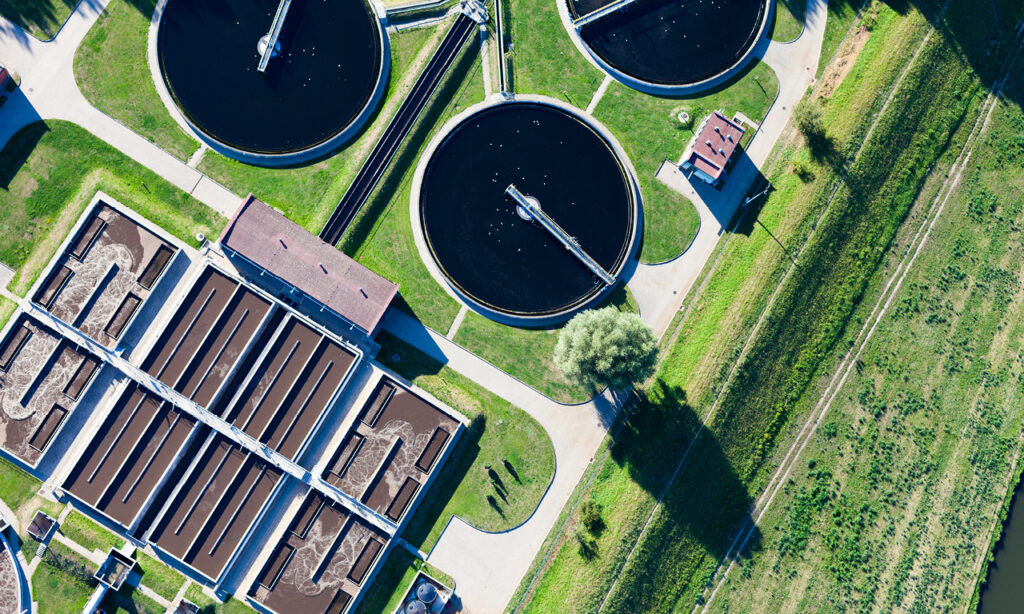
Cadmus’ team works with water and wastewater systems to address a wide range of compliance challenges, including resolving monitoring, reporting, and recordkeeping issues; troubleshooting and diagnosing plant inefficiencies or malfunctions; developing SOPs for water system operators; assisting with lead service line inventories; providing hands-on education based on preliminary assessment of needs (such as inventorying of assets or financing options); sharing reference materials such as manuals, SOPs, and checklists to improve compliance; providing customized group training for neighboring operators to facilitate mutual assistance and mentoring ; and developing preliminary engineering estimates that the water utility can use to apply for various funding sources (e.g., SRF).
