V2G represents a unique and creative way to help drivers save while helping California achieve its energy goals
As the electric grid evolves to accommodate rapid transportation and building electrification, vehicle-to-grid (V2G) technology is emerging as one of the most promising innovations at the intersection of energy and mobility. V2G enables electric vehicles to function not only as energy consumers but also as flexible grid resources, capable of exporting stored electricity back to homes, buildings, or the grid when it is needed most.
Vehicle-to-grid (V2G) technology is a two-way charging system that lets electric vehicles send stored battery power back to the local power grid.
V2G represents a potentially transformative opportunity to improve grid reliability, increase the value of distributed energy resources, and support decarbonization goals while creating new revenue streams for vehicle owners. Cadmus’ evaluation of San Diego Gas & Electric’s (SDG&E’s) V2G pilot provides valuable insights into both the opportunities and challenges of real-world implementation, from technology interoperability and data needs to customer economics and operational performance.
While V2G remains an emerging technology, early pilots are demonstrating its potential to help utilities manage peak demand, integrate renewable energy, and unlock the flexibility needed for a more resilient and dynamic energy system. As EV adoption accelerates, V2G is a technology to watch—one that could fundamentally reshape how vehicles interact with the grid and redefine the role of transportation assets in the energy ecosystem. These themes align with lessons identified in Cadmus’ V2G pilot evaluations, which continue to find significant long-term potential alongside the need for continued testing, data collection, and industry standardization.
SDG&E is focused on harnessing the inherent capacity of EVs to achieve decarbonization goals
SDG&E is an investor-owned utility serving approximately 3.7 million people across San Diego County and southern Orange County, delivering electricity and natural gas while advancing grid modernization, clean energy, and transportation electrification initiatives. As SDG&E continues to seek new strategies toward greater electrification, it was interested in utilizing the stored and unused battery charge of EVs in its territory to help replenish and redirect energy resources. V2G technology offered an exciting new approach in the effort to achieve these goals.
To test the potential impacts of successful V2G technology implementation, SDG&E designed a pilot to reduce peak demand at a targeted fleet location, send electricity back to the grid when needed, and characterize charger utilization and critical peak events when V2G is in use.
Barriers to implementing nascent technologies for the purpose of achieving energy goals.
As utilities, government agencies, and other stakeholders seek solutions to reduce grid stress and accelerate decarbonization, V2G technology offers a promising approach by transforming EVs into grid assets that can enhance reliability, support renewable energy integration, and advance climate goals.
As V2G remains an emerging technology, there are several critical barriers that need to be addressed to support adoption, which include:
- High upfront costs and uncertain return on investment: V2G deployment often requires bidirectional chargers, communication systems, software platforms, and interconnection upgrades, all of which can involve significant upfront expenditures. Because V2G markets are still emerging, stakeholders may be uncertain whether revenues from grid services, demand response, or energy arbitrage will be sufficient to justify these investments, making it difficult to establish a clear business case.
- First-mover risk aversion for pre-commercial technology: Many utilities, fleet operators, and customers are reluctant to be early adopters of V2G because the technology remains in the early stages of commercialization. Organizations may be hesitant to invest in solutions that have limited operational history, uncertain regulatory treatment, or evolving market structures, preferring to wait until the technology has demonstrated broader success and lower risk.
- Unproven charger and vehicle interoperability: Effective V2G requires seamless communication and coordination between EVs, chargers, utilities, aggregators, and grid operators. However, not all EVs and charging systems support bidirectional charging, and compatibility can vary across manufacturers and platforms. This lack of proven interoperability creates uncertainty regarding system performance, scalability, and customer experience.
- Lack of industry standardization: The V2G ecosystem is still developing common standards for communications, cybersecurity, interconnection requirements, data exchange, and market participation. Without widely adopted standards, manufacturers and service providers may deploy proprietary solutions that limit compatibility and increase implementation complexity, slowing market adoption and increasing costs for both utilities and customers.
SDG&E designed its V2G pilot to overcome these barriers. SDG&E sought to accelerate market growth and adoption of V2G technologies by testing the applicability of utilizing school bus fleets as a use case for the technology.
A novel approach to aid in resiliency efforts while benefitting community and children
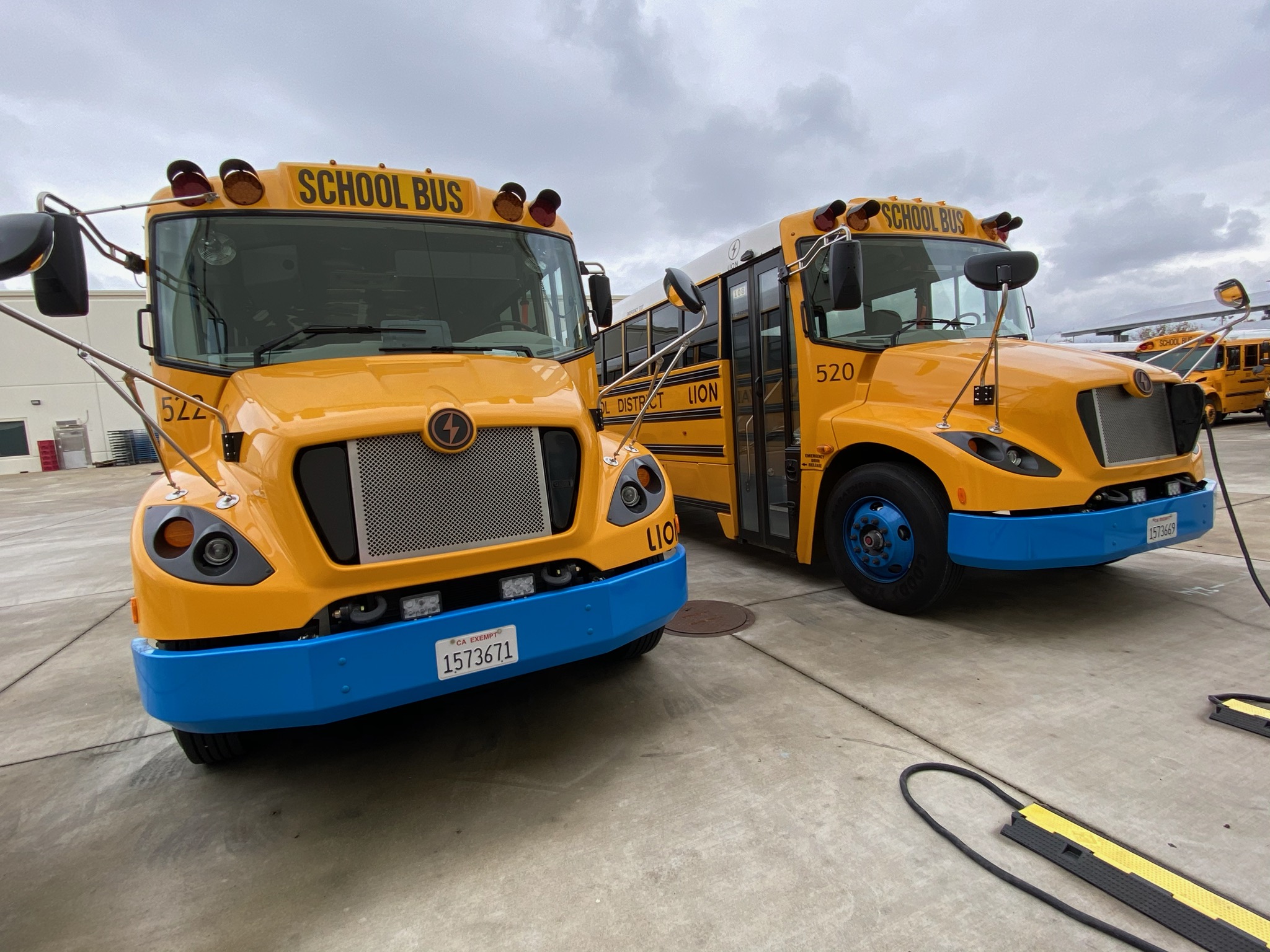
School bus fleets provide a favorable and unique use case for V2G. With predictable usage patterns that have vehicles traditionally sitting idle during peak demand periods and summer months when grid constraints are highest, school buses can take advantage of favorable time-of-use (TOU), off-peak electricity rates, and leave large batteries for energy storage underutilized.
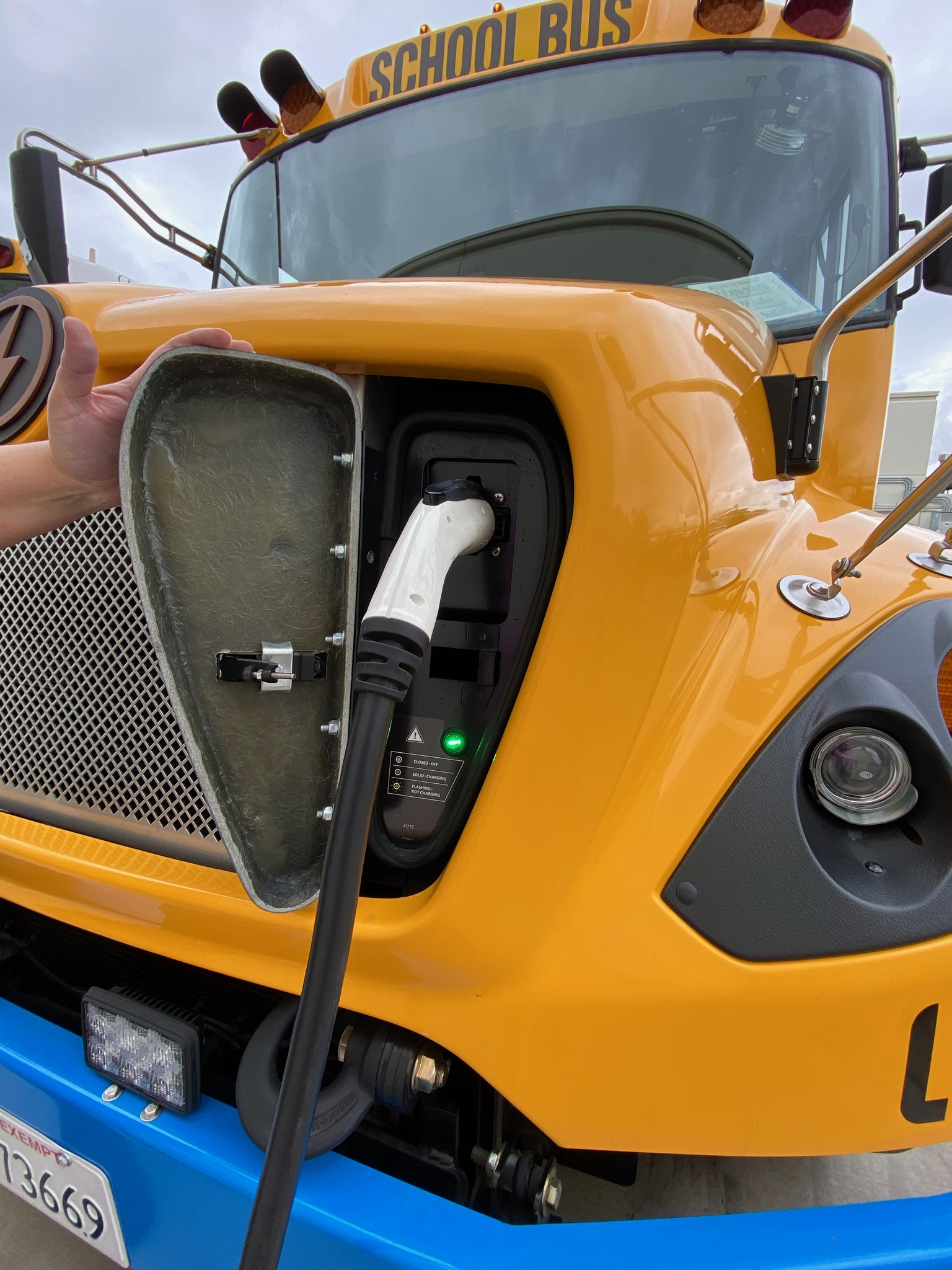
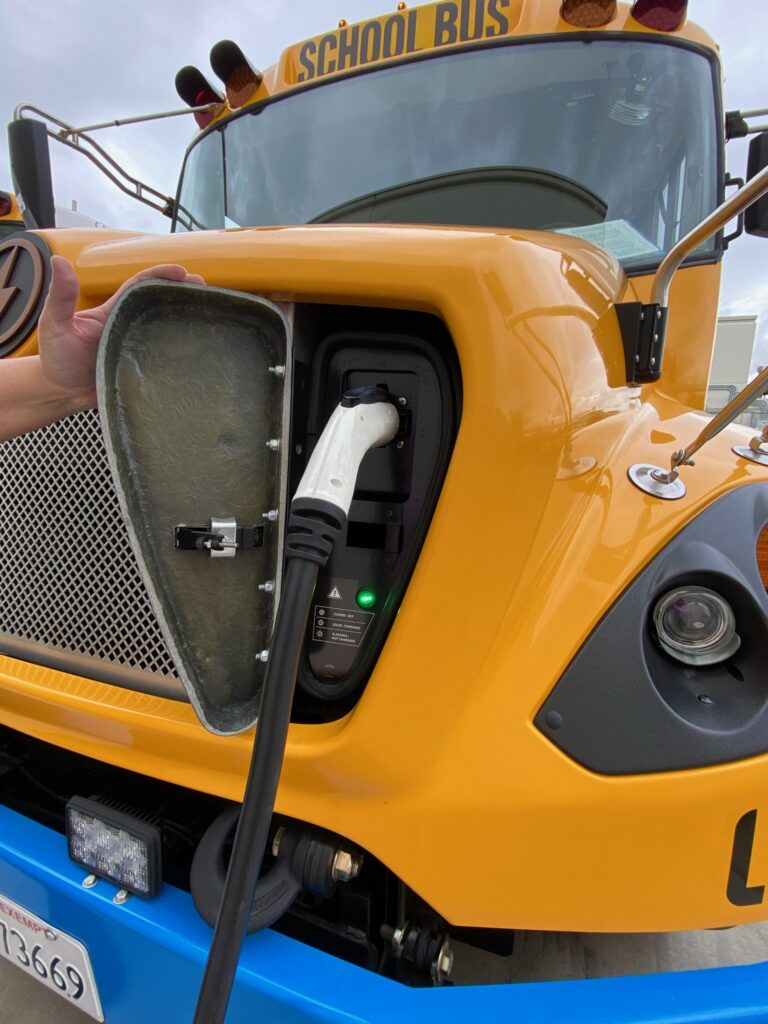
After nearly five years of planning, bidirectional commissioning was completed in June 2022. SDG&E installed, will maintain, and own the charging infrastructure associated with the electrification of six school buses capable of V2G operation and bid into the California Independent System Operator (CAISO) markets. As a result, SDG&E’s pilot became the first to employ V2G-enabled school buses to participate in the CAISO energy market, using 25 kW (discharging) V2G bidirectional chargers.
To help SDG&E understand how effective the pilot was in utilizing the school bus fleet as a distributed energy resource and in reducing greenhouse gas (GHG) emissions and local air pollution, Cadmus conducted a third-party, independent evaluation. Our research team leveraged in-depth interviews, bus driver surveys, grid impact analyses, a petroleum displacement assessment, and GHG and criteria pollutant emissions reductions calculations to estimate pilot benefits.
To establish grid impact potential, the pilot’s electrified school bus fleet participated in SDG&E’s emergency load reduction program (ELRP), which offers compensation for load shedding and allows customers to export power to the grid (such as through EVs) between 4 p.m. and 9 p.m. from May 1 to October 31.
Findings from the evaluation revealed:
- The total electric energy generation for the V2G pilot over a two-year period was 2,850 kWh, with most of the generation occurring during ELRP months (July, August, and September). The site host received $2 per kilowatt-hour for electricity that was fed back to the electric grid. There is opportunity for sites to reduce their operating costs by expanding their generation beyond the limited ELRP event periods to support on-site load reduction.
- The financial potential to participate in ELRP events may be $1,500 to over $2,500 per bus per year. This is dependent on several variables including vehicle availability and battery capacity, and reliable hardware and software interconnection. Net metering agreements could yield almost double the annual value of the ELRP per bus at $2,000 to $5,000.
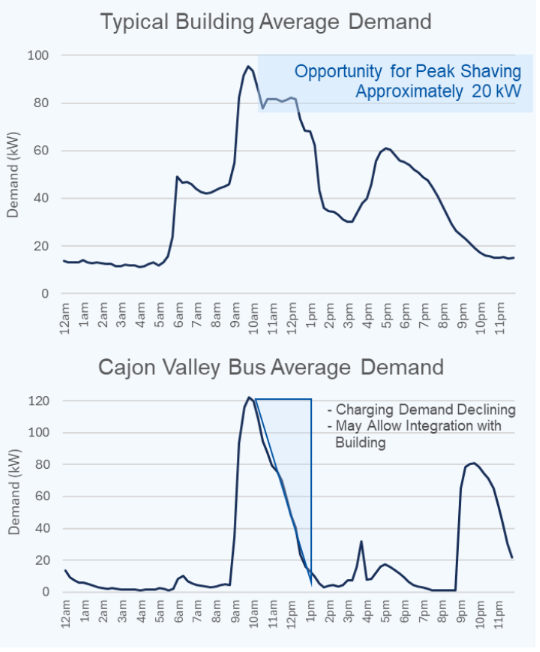
- Peak shaving at a rate of 20 kW could result in up to $7,500 in annual customer utility bill savings. Two hours of discharge daily for 20 business days per month could achieve a 20-kW reduction in demand for the bus lot’s building account. Our analysis indicated that if all six chargers had available buses to draw upon, this would be a small proportion of the remaining capacity of the battery (7 kWh of the 130-kWh capacity). Results indicate the account could save $600 a month.
- V2G is still a nascent technology. Grid, hardware, and software interconnection issues as well as data irregularities were a consistent challenge for this pilot. Drivers and maintenance staff cited frequent charging issues which impacted their satisfaction.
V2G: Where we stand and where we go from here…
Cadmus identified two lessons learned, which may help shape future efforts for implementing V2G technologies on a larger scale:
- V2G financial benefits could be increased by offering V2G specific rates and utilizing energy generation and battery storage outside of event-based programs. The California Energy Commission and California investor-owned utilities are already looking into this for future pilots.
- V2G technology is still emerging, and further studies are needed to fully understand the positive impact the technology can have on decarbonization efforts, especially as charging technology rapidly improves across the market.
Future V2G projects should prioritize interoperability of buses, chargers, and battery software during the project planning phase to enable successful charging operations from the start. Additionally, sufficient data is critical for emerging technology research. Along with providing access to advanced metering infrastructure (AMI), EV charging session, and telematics data, future projects would benefit from installing generation and consumption check meters for each charging station to more accurately monitor V2G operation and estimate the potential financial and energy impacts from these projects.
To learn more about SDG&E V2G pilot study, follow the link to the public evaluation report. The V2G pilot evaluation findings start on page 393 of the report.