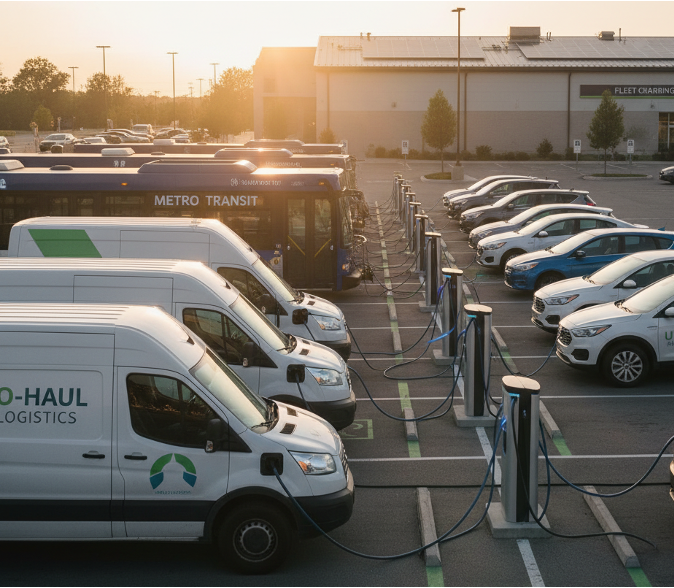

Leading the way on clean fuels, vehicles, and infrastructure

Cadmus is a global leader in clean transportation and electrification programs. We build tools. We train communities. We shape policy. We conduct rigorous, data-centric analysis. Our expertise underlies many of the most critical government, utility, and commercial programs across the world.

Cadmus capabilities

Planning services

We help organizations plan and accelerate electric vehicle adoption by determining appropriate vehicle and charging technologies, optimal charger placement, estimating costs, transitioning fleets, and designing effective policies and programs.

Project highlight

National EV policy evaluation system

Client need
Electrify America sought assistance in determining suitable locations for disbursement of $500 million for electric vehicle charging infrastructure and training for their Cycle 2 investment. Determining what jurisdictions had enacted policies which might enable rapid adoption of electric vehicles would help them select sites to meet public charging needs.

What we delivered
Cadmus built a policy rubric that allows state governments and utilities to assess the strength of their EV policies and understand weaknesses and benchmark their programs against other similar jurisdictions. Cadmus collected policy data from 40 states and 65 key metropolitan areas and developed a policy tool with a complete set of policies from the candidate local and state jurisdictions To develop the scoring rubric, Cadmus convened a Technical Advisory Committee of national transportation policy experts and produced guidance materials to allow governments to understand the relative impact of the different policies on EV adoption.

Client impact
In addition to helping Electrify America identify sites for investment of $500 million in EV infrastructure, Cadmus developed a report on behalf of NASEO, PEV Policy Evaluation Rubric: A Methodology for Evaluating the Impact of State and Local Policies on Plug-in Electric Vehicle Adoption.

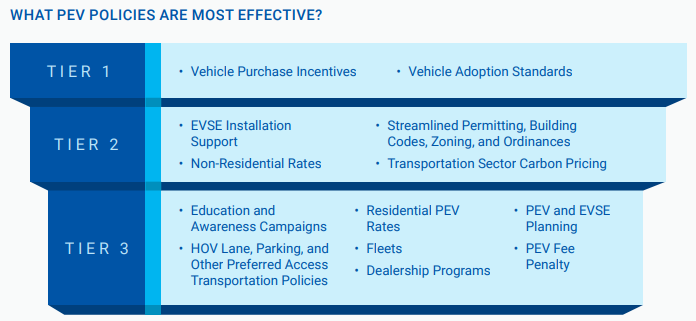
Evidence-Based Hierarchy of EV Policy Impact

Forecasting capabilities

We provide data-driven forecasts to help organizations plan for the future of zero-emission transportation, including projections of EV, hydrogen and other alternative fuel vehicle adoption by vehicle type, class and sector, infrastructure and electricity demand, environmental and societal impacts, and the geographic distribution of the vehicles and associated infrastructure needs.

Project highlight

Proactive planning of medium- and heavy-duty electric vehicles for the State of New York

Client need
As New York accelerates the electrification of medium- and heavy-duty (MDHD) vehicles, utilities and regulators face challenges in forecasting electricity demand, identifying infrastructure needs, and coordinating across stakeholders to ensure timely grid upgrades.

What we delivered
Cadmus supported the State of New York’s Proactive Planning regulatory filing by developing a detailed, bottoms-up load forecast for electric MDHD vehicles. Using aerial imagery, we identified approximately 30,000 truck and bus depots across the state and estimated en route charging needs with telematics data from the LOCUS platform. We collaborated closely with the Department of Public Service and six utilities to vet assumptions, align methodologies, and build on existing analyses.

Client impact
Our work established a standardized forecasting approach that enables faster regulatory approvals for critical grid upgrades. Sponsored by NYSERDA in partnership with the Department of Public Service, the project demonstrates Cadmus’ leadership in multi-stakeholder coordination and technical analysis to support the transition to zero-emission commercial transportation.

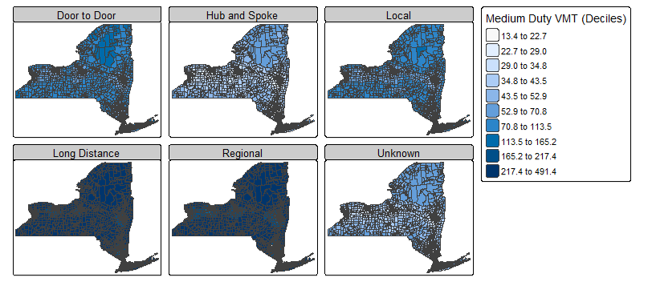
Average Daily Distance (Miles) of Medium Duty Vehicles by Trip Type

Analysis expertise

We have the capability to collect raw data and translate that into industry leading practices. We deliver advanced analytics and modeling—ranging from econometrics and machine learning to lifecycle and cost assessments—to support data-driven decisions in clean fuels, energy systems, and infrastructure planning.

Project highlight

Analysis of parking-constrained EV adopters

Client need
As California moves from early EV adopters to the early majority, a major barrier remains: millions of households lack access to at-home charging due to parking constraints. Utilities need better data to identify where public or curbside charging infrastructure can most effectively support equitable EV adoption.

What we delivered
Cadmus is conducting a comprehensive analysis of 4 million households in PG&E’s service territory to identify and characterize parking-constrained customers. By integrating large datasets—including Zillow’s BrightData, Experian vehicle registration data, and U.S. Census data—we’re mapping where unmet EV demand is highest and where infrastructure investments could have the greatest impact. 

Client impact
The analysis will equip PG&E with actionable insights to prioritize charging infrastructure deployment in underserved neighborhoods, accelerating EV adoption and supporting California’s ambitious climate goals. It also sets a precedent for data-driven, equity-focused planning as the state transitions to a zero-emission transportation future.

EV_Analysis_1
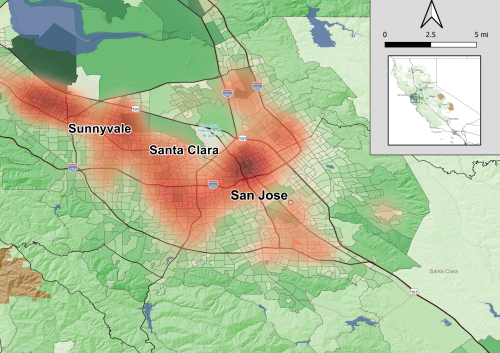
Heat Map of Parking-Constrained PG&E Customers

Evaluation leadership

We conduct rigorous transportation program evaluations using advanced analytics, econometrics, surveys, and field research to measure program impacts, assess fuel and electricity use, and generate insights on consumer behavior that drive smarter clean transportation policies.

Project highlight

Multifamily pilot evaluations

Client need
To date, most EV owners live in detached, single family homes. As EV penetration increases, there’s an unmet, latent demand for EVs among residents of multifamily dwellings (e.g., apartments and condos). Yet, little is known about the best solutions for providing charging access to these residents.

What we delivered
Cadmus led the third-party evaluation of three TE pilots for Xcel Energy in Minnesota, with over $32 million allocated for charging infrastructure. Launched in fall 2024, the evaluation includes close collaboration with Xcel to assess program performance, identify customer and operational insights, and support continuous improvement. The evaluation is designed to inform the development of Xcel’s next TE Plan, scheduled for submission in late 2025.

Client impact
Our work is helping Xcel Energy deliver transparent reporting, enhance customer engagement, and refine its approach to EV infrastructure deployment. By identifying key lessons from the pilots, Cadmus is supporting the utility in scaling successful strategies into full programs that accelerate EV adoption and meet Minnesota’s clean transportation goals.

Multifamily Pilot Evaluations

Administration services

We help design and administer clean transportation programs with services such as technical assistance, RFP development, stakeholder engagement, participant compliance, performance tracking, quality assurance, and transparent public reporting—to ensure effective and accountable implementation.

Project highlight

Medium- heavy-duty charging corridor along I-95

Client need
Private companies are increasingly interested in electrifying their medium- and heavy-duty fleets but lack of enroute charging is an impediment. For many fleets with long daily travel distances, enroute charging is the only financially viable option for refueling. To date, very minimal medium- or heavy-duty enroute chargers exist on the east cost.

What we delivered
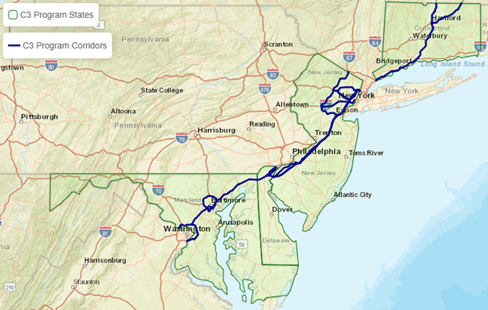
Cadmus administers a $250 million EPA-funded program on behalf of four states (NJ, MD, CT, DE) who are building the first east coast medium- and heavy-duty charging corridor along I-95. Along with partners Mathtech, Atlas Public Policy, CALSTART, NESCAUM, and Georgetown Climate Center, Cadmus is supporting the RFI development, public comment review, advisory support, metric tracking, quality assurance, dashboard development, and public reporting.

Client impact
Although the project is still in early stages, Cadmus is providing the backbone of support to the four states, ensuring the project stays on time and under budget.

Program states and corridors

International reach

We support international e-mobility projects for national governments, multilateral development banks, and non-governmental organizations in emerging and developed markets.

Project highlight

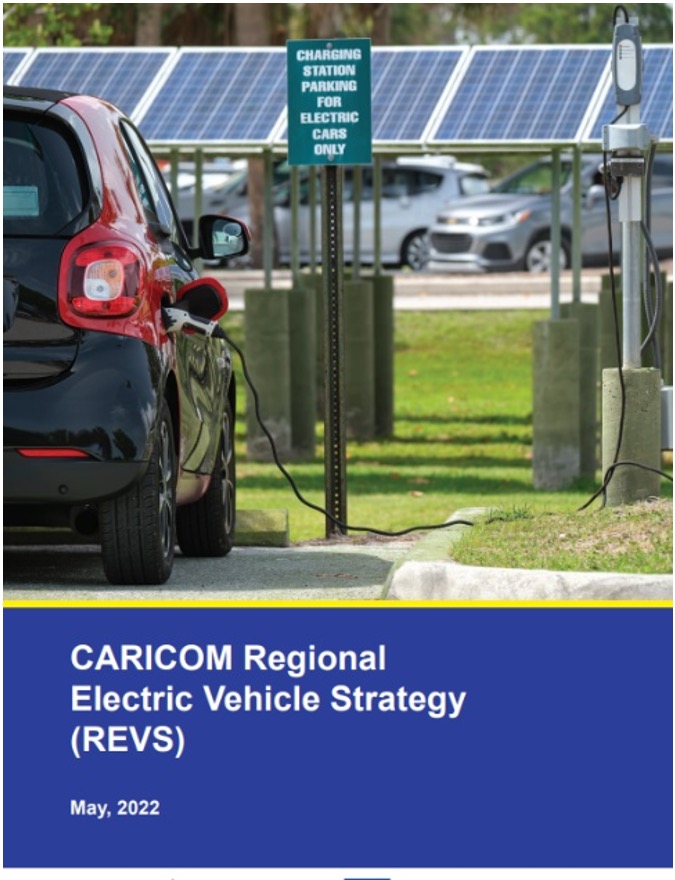
Caribbean Regional Electric Vehicle Strategy (REVS)

Client need
Caribbean nations face unique challenges in transitioning to electric mobility, including diverse transportation needs, infrastructure limitations, and varying policy landscapes. A unified, regionally tailored strategy was needed to guide the Caribbean Community and Common Market (CARICOM) Member States in advancing surface transport electrification while respecting local contexts and priorities.

What we delivered
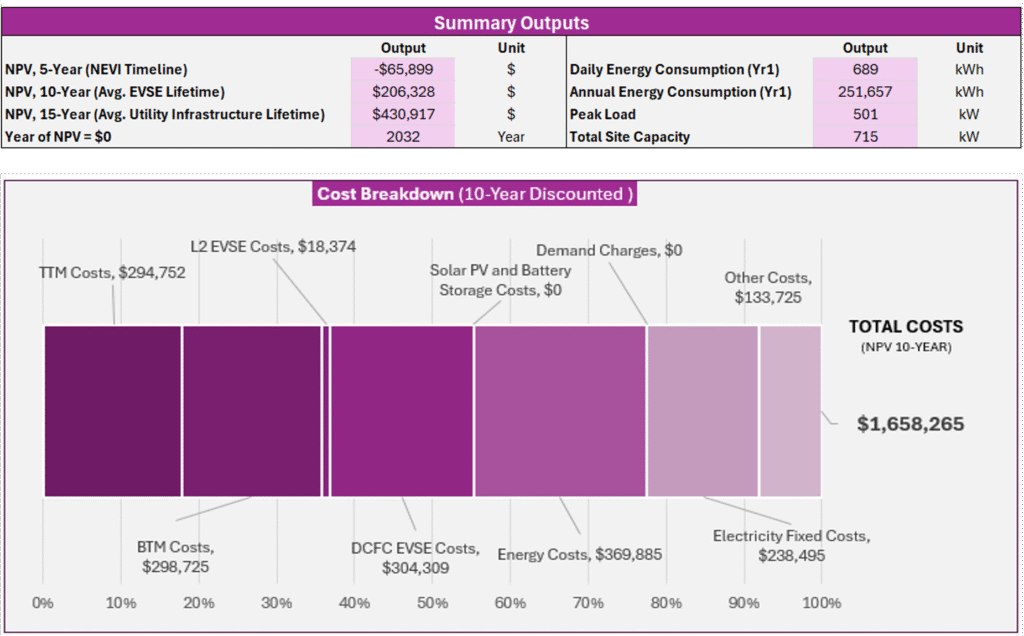
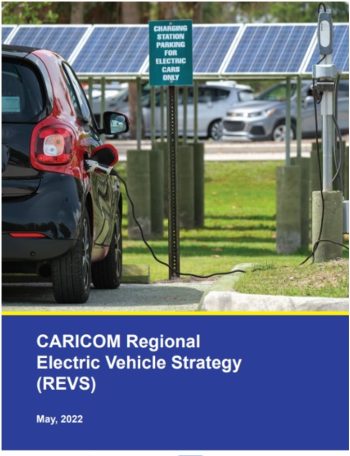
Cadmus partnered with the CARICOM to develop the Regional Electric Vehicle Strategy (REVS), a comprehensive framework offering policy guidance, implementation tools, and coordinated actions. Informed by regional best practices and stakeholder engagement, REVS addresses key areas such as policy and regulation, infrastructure, capacity building, financing, innovation, and monitoring. The project was supported by Deutsche Gesellschaft für Internationale Zusammenarbeit (GIZ).

Client impact
The REVS delivered 27 actionable strategies that serve as a blueprint for CARICOM Member States to develop and implement national EV strategies for both on-road and domestic marine transport. It also strengthened regional collaboration, empowered local institutions, and laid the groundwork for a more sustainable, equitable, and resilient transportation future across the Caribbean.

Caribbean Regional Electric Vehicle Strategy (REVS)
Cadmus-Led Regional EV Strategy for Caribbean Community

Talk to a Cadmus expert

Geoff Morrison Headshot

Geoff Morrison, PhD

Transportation Data Scientist

Dr. Geoff Morrison supports local, state, and national governments on transportation energy policy. He specializes in developing data-centric analyses, modeling, and tools to inform science-based decisions. Previously, he served as at the U.S. Department of Energy and as a nuclear-trained officer in the U.S. Navy.

Michael Colby

Michael Colby

Utility Transportation Electrification Expert

Michael Colby has extensive experience in utility focused transportation electrification initiatives, helping clients accelerate the transition to clean transportation through strategic planning, program development, and evaluation. He leads projects that support electric vehicle adoption and grid modernization, driving measurable impacts across public agencies and private organizations.

Melissa Deas headshot

Melissa Deas

Resilient Infrastructure Expert

Melissa Deas specializes in resilient infrastructure and transportation, focusing on solutions that deliver wide-ranging co-benefits—mitigating disaster risk, promoting economic growth, and improving safety for all users. She currently serves as Technical Lead for the Reconnecting Communities Institute, which provides technical assistance to practitioners nationwide as they implement projects to overcome transportation barriers.

Rex Hazelton Headshot

Rex Hazelton

Government Strategy Lead

Rex Hazelton is experienced in transportation decarbonization, energy technology commercialization and energy policy. He leads Cadmus’ Technical Analysis and Planning practice, providing Technical Assistance to state and local governments, fleets, and private sector companies on the issues of alternative fuel vehicles, charging infrastructure planning, financial analysis, policy evaluation and program administration.
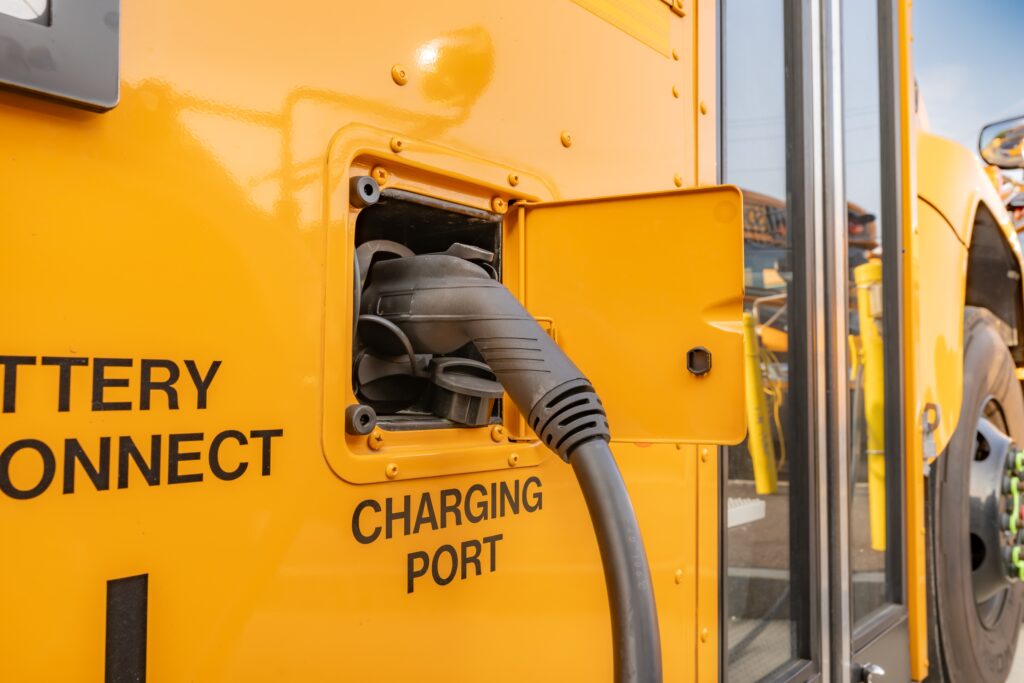
Project Spotlight

Evaluation of California utility-led charging programs

California is leading the nation in the transition to electric vehicles, driven by ambitious state policies and utility-led charging infrastructure programs. Representing the single largest evaluation of its kind, the Cadmus team is evaluating the impacts and challenges of these investments. The multi-year project aims to identify factors driving demand for EVs, how utilities can effectively scale EV charging programs, and how they can unlock latent EV adoption.

PROJECT INSIGHTS

Findings from Year 4

Blog post series features key findings from the latest evaluation report, covering topics such as costs of installation and roadblocks to adoption.

Comprehensive Analysis

The evaluation team has a unique vantage point, amassing the largest data sets on EV charging, utility incentives, and project costs. Review the evaluation reports for Years 1–4.

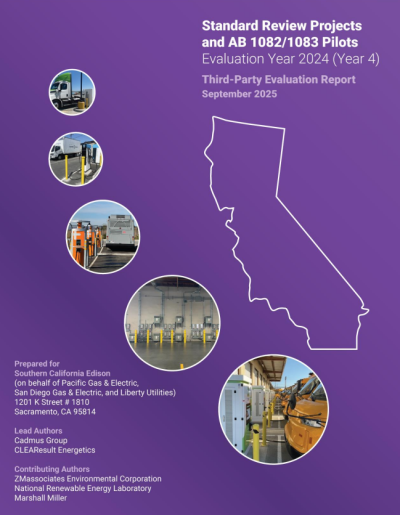
Cover of Standard Review Projects Evaluation Year 2024. Graphic outline of California with small images of medium and heavy duty vehicles charging.

Related resources